

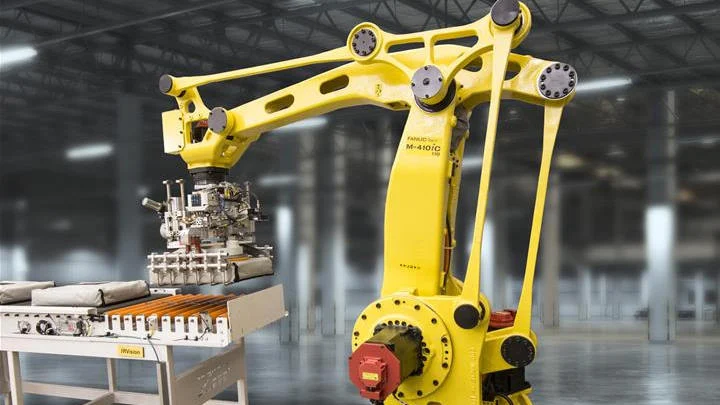
In the world of industrial automation, a robot arm is often compared to a human arm. It has joints, a defined reach, and the ability to move through space with repeatable precision. However, just as a human arm requires a hand to perform a meaningful task, a collaborative robot—or cobot—remains a mere manipulator until it is equipped with specific hardware at its wrist. This hardware, known as End-of-Arm Tooling (EOAT), is the functional interface between the machine and the product.
For production managers and automation engineers, understanding that the robot is simply the delivery mechanism is a fundamental shift in perspective. The true value of an automation cell is realized at the point of contact. Whether a system is designed for palletizing, machine tending, or delicate assembly, the EOAT determines the limits of what can be achieved. It is the tool, not the arm, that ultimately dictates the success of the application.
The functional bridge to productivity
When evaluating a robotic investment, it is easy to focus on the specifications of the robot arm—reach, payload, and degrees of freedom. While these are important, the EOAT is what transforms a generic six-axis machine into a specialized worker. Without the right end effector, a robot is incapable of interacting with its environment in a way that generates output.
Modern end-of-arm tools fall into several distinct categories, each serving a specific role in the production process. Grippers are perhaps the most recognizable, using mechanical fingers, vacuum suction, or magnetic force to secure parts. Process tools, such as screwdrivers, sanders, or welding torches, allow the robot to perform active manufacturing steps. Finally, sensors—including force-torque sensors and vision systems—provide the “nervous system” required for the robot to perceive its surroundings.
Selecting the right tool for the task
The selection process for EOAT is often more complex than choosing the robot itself. This is because the tool must account for the physical characteristics of the workpiece, such as its weight, geometry, and surface fragility. A tool that is too heavy will consume the robot’s available payload, reducing the weight of the part it can actually carry. Conversely, a tool that lacks the necessary grip force or precision can lead to dropped parts and inconsistent quality.
In many small and medium-sized enterprises, the ease of integration is a deciding factor. Facilities that lack large, dedicated automation departments require solutions that are “plug and play.” The industry leader Onrobot has addressed this need by developing a unified interface that simplifies how tools communicate with various robot brands. This standardization allows engineers to swap tools quickly, which is essential when a single cobot must handle different tasks throughout a work week.
Safety and interaction in collaborative spaces
Collaborative robotics is defined by the ability of humans and machines to share a workspace without traditional safety fencing. While the cobot arm is designed to stop upon contact, the EOAT must also be scrutinized during a risk assessment. A safe robot arm equipped with a sharp or high-temperature tool still presents a hazard that must be mitigated through design or software limits.
Force control is a critical feature in these environments. Advanced EOAT can detect minute changes in resistance, allowing the system to perform sensitive tasks like sanding or buffing with the same “feel” as a human operator. This sensitivity also acts as a safety layer; if a gripper encounters an unexpected obstacle—such as an operator’s hand—it can react instantaneously. In plants where ergonomics is a priority, these tools take over repetitive, strain-inducing movements, allowing human workers to focus on higher-level oversight.
Impact on quality and production stability
The relationship between EOAT and process repeatability cannot be overstated. In manual operations, human fatigue often leads to slight variations in how a screw is driven or how a part is placed into a CNC machine. A well-designed end-of-arm tool eliminates this variability. By maintaining a constant pressure and precise positioning, the tool ensures that every cycle is identical to the last.
This stability is particularly valuable in high-mix, low-volume production. When a factory needs to switch from one product variant to another, the ability to change the EOAT or adjust its parameters via software minimizes downtime. Modular tooling systems allow for rapid reconfiguration, making it possible to adapt to short production runs without the need for expensive, custom-engineered fixtures for every new SKU.
Systematic integration over simple addition
Approaching EOAT as a modular “add-on” is a common mistake that can lead to integration bottlenecks. Instead, it should be viewed as a core component of the total system architecture. The physical design of the tool, its power requirements (whether electric or pneumatic), and its software compatibility all influence the overall efficiency of the cell.
When the tool and the robot work in perfect synchronization, the result is a robust, flexible system capable of evolving alongside the business. As manufacturing continues to move toward greater customization and faster turnaround times, the flexibility provided by advanced end-of-arm tooling will remain the primary driver of robotic ROI. The arm provides the motion, but the tool provides the results.