

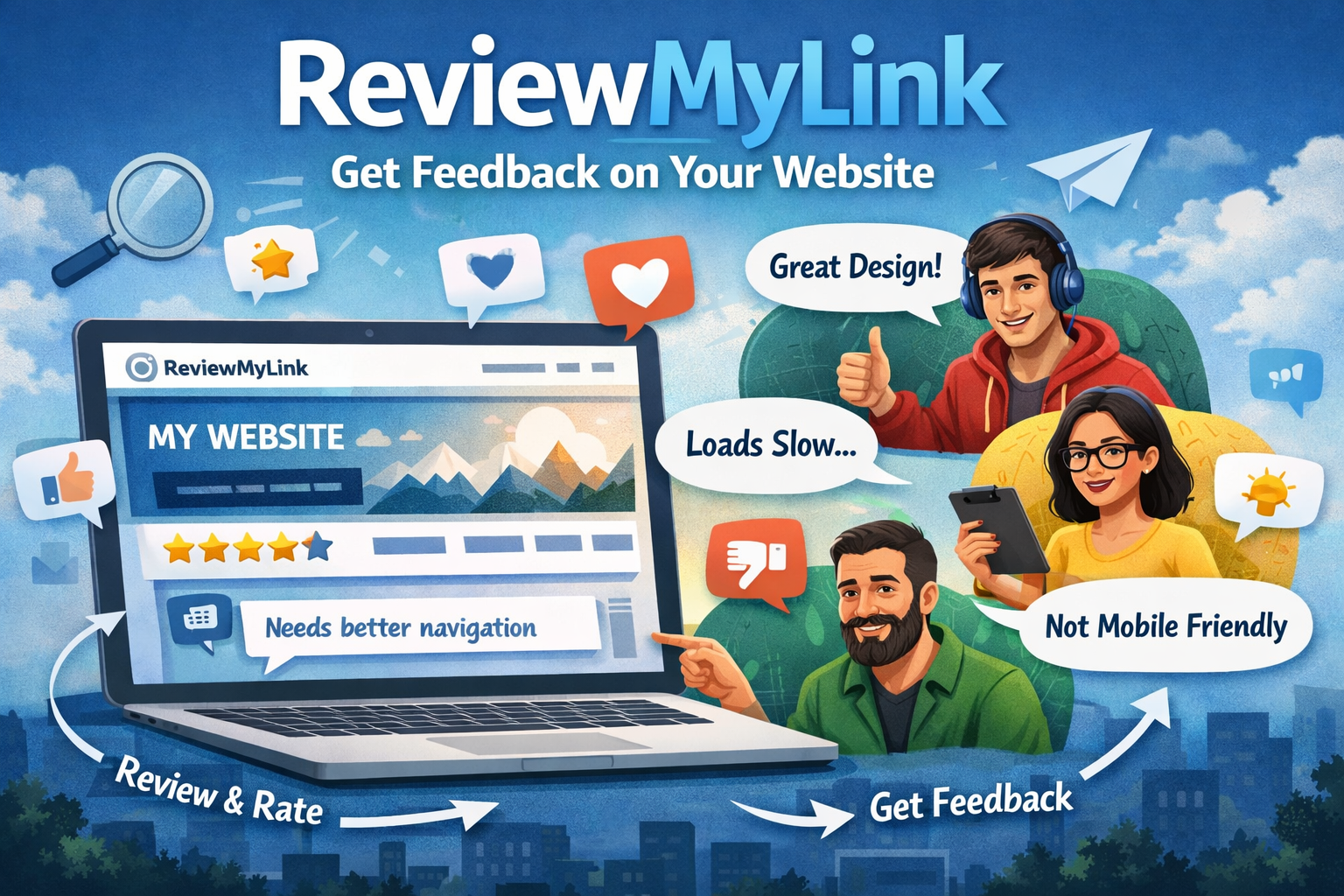
In today’s digital landscape, launching a website is easier than ever—but building a good website is still a challenge. Whether you are a blogger, entrepreneur, developer, or small business owner, one of the hardest parts of improving your site is getting honest, actionable feedback. This is where platforms like ReviewMyLink come into play. Designed as a community-based feedback exchange, ReviewMyLink focuses on helping users evaluate and refine their websites through peer reviews.
At its core, ReviewMyLink operates on a simple idea: you submit your website, and in return, you review others. This reciprocal model creates a cycle of feedback where users both give and receive insights. Unlike traditional professional audits or expensive consulting services, ReviewMyLink offers a more accessible and informal way to understand how real users perceive your site.
The Concept of Website Reviewing
Website reviewing is an essential part of the development and growth process. A site may look perfect to its creator, but visitors often experience it differently. Issues such as confusing navigation, slow loading times, poor mobile responsiveness, or unclear messaging can go unnoticed without external input. ReviewMyLink attempts to bridge this gap by providing a space where users can highlight these issues.
The platform encourages reviewers to focus on key aspects such as:
- User experience (UX)
- Design and layout
- Content clarity
- Functionality
- Overall impression
This structure helps website owners receive well-rounded feedback rather than vague opinions. Even though the reviewers are not necessarily professionals, the diversity of perspectives can be surprisingly valuable.
How ReviewMyLink Works
Using ReviewMyLink is straightforward. Users typically begin by submitting a link to their website or specific webpage. To gain visibility or earn the ability to receive reviews, they are expected to review other submissions. This creates a balanced ecosystem where participation is required for benefit.
The reviewing process usually involves visiting a submitted link and leaving comments or ratings. Some platforms like this also incorporate point systems or incentives to encourage engagement. While the exact mechanics may vary, the principle remains the same: active participation leads to more feedback.
This approach has two major advantages. First, it ensures that users are invested in the system rather than passively waiting for feedback. Second, it exposes reviewers to a variety of websites, which can also inspire ideas and improvements for their own projects.
Strengths of the Platform
One of the biggest strengths of ReviewMyLink is accessibility. Unlike hiring a UX consultant or running formal usability tests, this platform requires no significant financial investment. It lowers the barrier to entry for individuals who are just starting out or working with limited resources.
Another advantage is speed. Traditional feedback channels—such as asking friends, conducting surveys, or hiring experts—can take time. ReviewMyLink offers a faster alternative where feedback can arrive relatively quickly, especially if the user actively participates in reviewing others.
Additionally, the platform provides a form of real-world testing. Since the reviewers are often everyday internet users, their feedback reflects genuine first impressions. This can be particularly useful for identifying usability issues that might not be obvious during development.
Limitations and Considerations
Despite its usefulness, ReviewMyLink is not without limitations. The quality of feedback can vary significantly. Because the reviewers are not necessarily experts, some comments may be superficial, overly subjective, or inconsistent. This means users must filter through responses to identify truly valuable insights.
Another concern is depth. While the platform is good for general impressions and quick suggestions, it is unlikely to replace professional audits or in-depth usability testing. Complex issues such as advanced UX problems, SEO optimization, or technical performance analysis often require specialized tools and expertise.
There is also the question of engagement. Platforms that rely on reciprocal participation can struggle if users are not consistently active. In such cases, the volume and quality of feedback may decline.
Best Practices for Using ReviewMyLink
To get the most out of ReviewMyLink, users should approach it strategically. Instead of simply submitting a link and waiting for feedback, active engagement is key. Reviewing others thoughtfully not only earns credibility but can also lead to more detailed responses on your own site.
It is also helpful to ask specific questions when submitting a link. For example, instead of requesting general feedback, you might ask:
- “Is the navigation intuitive?”
- “Does the homepage clearly explain what the site offers?”
- “Are there any confusing elements?”
Targeted questions tend to generate more useful answers.
Finally, users should treat feedback as a starting point rather than a final verdict. Not all suggestions will be relevant or accurate, but patterns in the feedback can reveal important areas for improvement.
The Bigger Picture
ReviewMyLink represents a broader trend in digital collaboration: community-driven improvement. As more people create online content, the need for accessible feedback tools continues to grow. Platforms like this fill an important niche by offering a low-cost, user-friendly way to evaluate websites.
While it may not replace professional services, ReviewMyLink serves as a practical stepping stone. It allows creators to identify obvious issues, gather diverse opinions, and refine their work before investing in more advanced solutions.
Conclusion
In summary, ReviewMyLink is a simple yet effective platform focused on the exchange of website reviews. By leveraging community participation, it provides a space where users can gain insights into how their sites are perceived and where improvements can be made. Although it has limitations in terms of depth and consistency, its accessibility and ease of use make it a valuable tool—especially for beginners and small-scale creators.
For anyone looking to improve their website without significant cost, ReviewMyLink offers a practical starting point. With the right approach and mindset, it can become a useful part of a broader strategy for building better, more user-friendly websites.