

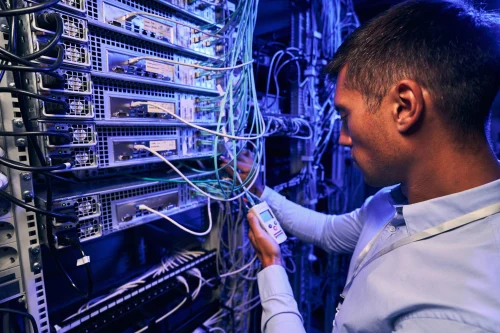
In contemporary global businesses, data centres are the backbone. Maintenance practices should be regular and consistent as far as server reliability is concerned. These practices will avoid any unpleasant surprises during the downtime and increase the life of the equipment greatly.
Hardware maintenance procedures that keep data centre infrastructure running
Regular physical cleaning protocols
One of the largest risks to longevity of servers within a data centre environment is dust accumulation of servers. Particles deposited by air settle on parts leading to overheating and electrical failure with time. The following are the fundamental cleaning practices that all facilities have to practice:
- Scheduled interior vacuuming: Dust is swept off internal parts using compressed air or special vacuums and this is not statically damaging.
- Filter replacement routines: Air intake filters have to be changed every month so as to avoid restricted airflow via server chassis.
- Cleaning of floors and tiles: Raised areas of the floor form piles, which circulating air may move around in the facility.
- Cable management attention: Cable management is effective because organization of cables will eliminate dust traps and enhance the circulation of air in equipment racks.
- Preventative maintenance scheduling: Periodic cleaning of the systems will help avoid accumulations that will affect the vital systems operations.
Environmental monitoring and control
The humidity and temperature directly influence the hardware dependability and life and manufacture of servers. The exact conditions of the environment in data centres have to be upheld in a continuous manner without lapse. These are the key environmental aspects that must be taken into consideration all the time:
- Temperature range maintenance: It is advised that temperatures should be kept within a temperature span of 18 to 27 degrees Celsius to avoid damage of overheating.
- Humidity level regulation: The humidity level of 40-60 percent avoiding any discharge and condensation of the statical discharge.
- Airflow management systems: The use of hot aisle and cold aisle setups results in the highest operating efficiency of cooling throughout the server rows.
- Leak detection implementation: Water sensors constructed in the area of cooling units notify the personnel about the possibility of an emergency related to flooding.
- Remote monitoring tools: Environmental sensors will send real-time notifications using management platforms which are centralized.
Hardware diagnostic and performance monitoring
Independent tracking of broken parts in time averts these surprises of component failures to operations. Constant tracking gives an early notice on the condition of hardware problems. The following are the diagnostic practices that will be necessary in server hardware maintenance.
- SMART data analysis: The reports of hard drive self-monitoring will show the failures in the work even before the data is lost.
- Memory testing schedules: memory diagnostics are conducted on a periodic basis in order to detect memory defects that generate system instability and crashes.
- CPU performance tracking: The very presence of processor temperature and utilization tracking identifies cooling issues or workload issues.
- RAID array verification: This is a check of storage controller status that shuns redundancy across disk groups.
- Log file review routines: System logs are populated with warnings about hardware problems that are developing attention is required.
Frequently asked questions
What is the frequency of physical cleaning of data centre servers?
The majority of facilities have regular cleaning after every three to six months based on the environmental conditions.
In what temperature will damaging overheating of the server take place?
The constant use in temperatures of greater than 30 degrees Celsius greatly accelerates the failure rates in the vast majority of server components.
How long will enterprise server hardware last?
The average life of most data centre equipment is three to five years before the consideration of the replacement.